Showing posts with label Skin. Show all posts

Sunday, September 12, 2021

Top Cellulite Treatments and Fixes

Daniel Day/Iconica

Smooth Transitions

Cellulite can be found on most women's thighs, bottoms, and bellies. It's common, but if it bothers you, there are certain things you can do to make it less obvious.


Smart Exercise
Lisa Spindler Photography Inc. / The Image Bank


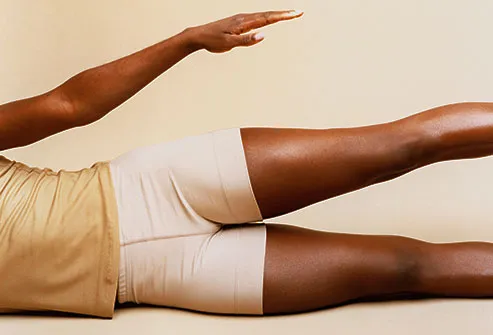
Get your feet moving. It is one of the most effective treatments. Strong muscles under lumpy areas can help your skin look more even, but it won't make your cellulite go away. Try a three-part strategy: a nutritious diet, brisk exercise, and muscle-toning movements.


Consume More Raw Foods

Maximilian Stock Ltd. / Photographer’s Choice


Instead of "empty"-calorie items, eat more fiber, which may be found in whole grains, fruit, and vegetables. Calories are added by simple or "refined" carbs present in many breads, confectionery, and soft drinks. This causes fat to form, especially in places prone to cellulite.


Lose a Couple of Pounds

Tetra Images

Cellulite can affect everyone, whether they are thin or fat. However, being overweight makes it more obvious. The greatest way to lose weight if you're overweight is to lose a few pounds. However, try to lose weight gradually. Cellulite can be exacerbated by yo-yo dieting. It's possible that if you've dropped a lot of weight, it'll show up in regions where your skin is loose. Inquire with your doctor about treatment options.


Get Rid of the Habit
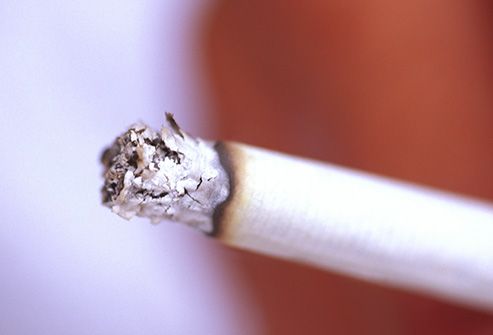


Every puff has an effect on your skin's blood supply. It becomes thinner and more prone to sagging. Cellulite on your arms, thighs, and bottom will be more evident as a result of this. Consult your doctor to determine which way of quitting smoking is best for you.


The Dimpled Zone should be massaged.
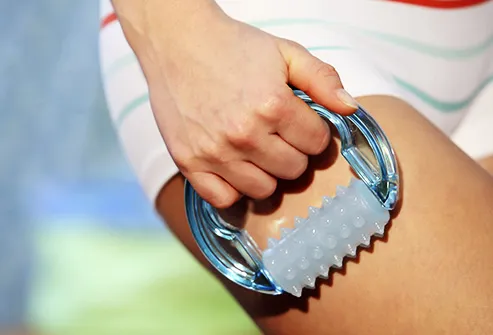


Give these areas a good rubdown every day for a few minutes.

When you're in the shower or applying lotion, give it a shot. Massage increases blood flow and eliminates extra fluid, making dimples less evident for a short time.


Put Products to the Test Run



Plant extract creams may temporarily improve the appearance of your skin. Caffeine-based treatments, for example, can help tighten your skin swiftly. But, would a massage or your regular moisturizer suffice? Make a test. Also, before slathering on a new product, test a small dab to see how your skin reacts.


Make Retinol Cream a Part of Your Daily Routine
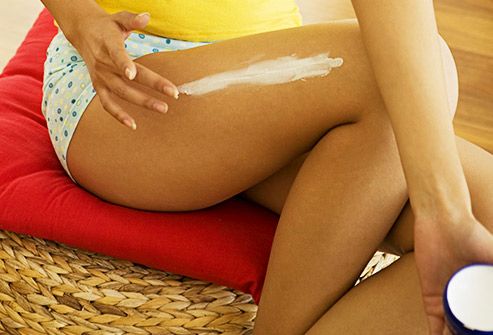


Look for the phrase retinol in advertisements for firming creams. Nothing will help you get rid of cellulite. It can, however, improve the appearance and texture of your skin. The best retinol product is one that contains 0.3 percent retinol. To observe results, you must utilize it for at least 6 months. It should help hide rough spots beneath the surface of your skin by thickening the outer layer.


On a "Bottle Tan," be smooth.


A self-tanner may be beneficial if you have fair skin. On darker skin, dimpled patches are less evident. Begin by exfoliating your skin gently, then apply a self-tanning lotion to the cellulite-prone regions only. After that, spritz a tanning spray all over your body. Don't get a true tan. It will harm your skin and exacerbate the appearance of cellulite.


Support Stockings.



Support hosiery today aren't like the heavy, droopy ones your grandmother wore. Because they assist prevent cellulite from collecting fluid, if you wear them frequently, your skin should appear smoother. Your doctor or pharmacist can assist you in selecting the appropriate grade. The catch is that it may take a year or more!


Allow yourself to be pampered with a body wrap.
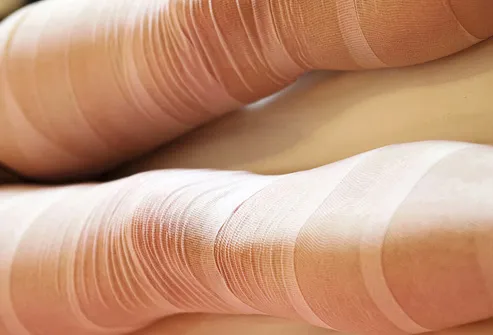


Visit a spa! For a short time, a body wrap can tighten and smooth your skin. The effects persist for about a day, and the price varies. A body shaper or an elastic bandage wrapped over your cellulite zones could offer you spa-like results for a fraction of the price of a spa visit.


Massage and suction work together.
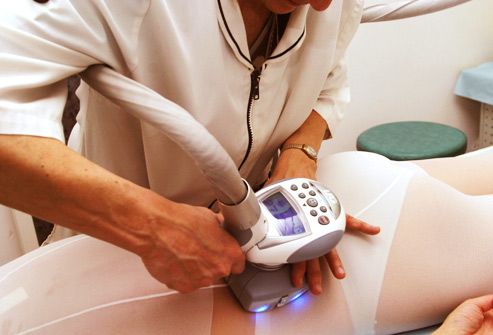


Lipomassage gathers and massages your skin using a rolling suction device. Although the treatment is FDA-approved, it is also costly. It may also take a few sessions to see effects. Unless you repeat the process, the benefits are likely to fade.


Bring the Heat With Lasers and RF Lasers and radiofrequency (RF) heat your skin while also massaging and suctioning it. The treatments can make your bumps look smoother for up to 6 months in some situations. They aren't painful, but they can be costly, and you may need multiple visits.


Cellulaze Exhibits Potential



Cellulite is zapped at the source with this FDA-approved surgery. A laser is inserted beneath your skin by the doctor to decrease fat cells, cut the stiff bands that produce lumps, and thicken your skin. The effects should continue at least a year, but the long-term consequences remain uncertain. Make sure you have this operation done by a board-certified cosmetic surgeon. If you're very heavy or have a lot of cellulite, it could not work for you. Consult your doctor for advice.


Success of a Single Treatment
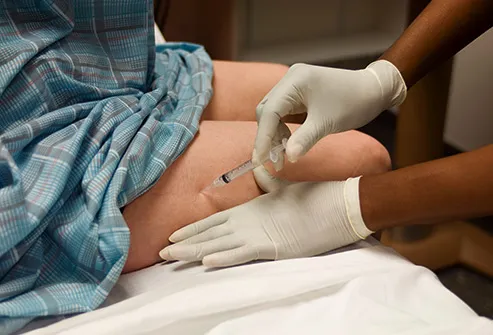


Another FDA-approved therapy, Cellfina, claims to remove cellulite in just one session. After numbing the area, your doctor will inject a needle-sized device into your skin. They'll cut through the lumps and bumps caused by cellulite-causing bands under your skin. The modifications should persist for roughly two years. If you have loose skin or so-called "orange peel" cellulite, Cellfina won't help you.


Sources;

IMAGES PROVIDED BY:

1)         Daniel Day/Iconica

2)         Lisa Spindler Photography Inc. / The Image Bank

3)         Maximilian Stock Ltd. / Photographer’s Choice

4)         Tetra Images

5)         Nacivet / Photographer’s Choice

6)         Axel Leschinski / age fotostock

7)         StockFood / Colin Cooke

8)         Mirko Iannace / age fotostock

9)         Lucenet Patrice / Phototeque Oredia

10)        mana productions inc.

11)        Claudio Beduschi/Photolibrary

12)        BSIP/Phototake

13)        altrendo images / Stockbyte

14)        Tetra Images

15)        Getty Images

REFERENCES:

American Society for Aesthetic Plastic Surgery: "Cellulite: An Update," "Fat Reduction: Aminophylline Cream -- ASAPS Position," "Aesthetic Surgeons Sort through Data and Hype on New and Upcoming Fat Treatments," "American Society for Aesthetic Plastic Surgery Warns Patients to Steer Clear of Injection Fat Loss Treatments," "Wise-woman's Guide to Cellulite Treatments."
Barbosa, Victoria, MD, board-certified dermatologist, Chicago.
Cellulaze: "You Have Questions, We Have Answers."
Green, J.B. Seminars in Cutaneous Medicine and Surgery, September 2015.
International Academy of Cosmetic Dermatology: "Tanning Beds."
Misbah Kahn, MD, FAAD, dermatologist; clinical assistant professor of dermatology, Weill Cornell Medical College; New York.
Khan, M. Journal of the American Academy of Dermatology March 2010.
Lupi, O. Journal of Cosmetic Dermatology, 2007.
Medscape Education: "Topical Treatments for Fat Reduction -- Do They Work? A Best Evidence Review."
News Release, FDA
Smalls, L. Plastic & Reconstructive Surgery, August 2006.
U.S. Federal Trade Commission Staff Report: "Deception in Weight Loss Advertising Workshop: Seizing Opportunities and Building Partnerships to Stop Weight Loss Fraud," December 2003.
U.S. Food and Drug Administration: "FDA Warns About Lipodissolve Product Claims," April 7, 2010.
University of New Mexico: "Cellulite: A Review of Its Anatomy, Physiology and Treatment."
Wanner, W. Journal of Drugs in Dermatology April 2008.
West Country Plastic Surgeons of Washington University: “Cellfina In St. Louis.”

Saturday, September 11, 2021

The World's First Black Patient Face Transplant Posed Unique Challenges

 Robert Chelsea, before his face transplant Lightchaser Photography


 (HealthDay News) — WEDNESDAY, March 17, 2021 (HealthDay News) — After losing most of his face in a devastating Los Angeles traffic accident years ago, Robert Chelsea needed a new one.


According to a new study, Chelsea is Black, and the process of giving him the first-ever face transplant presented unique complications for his doctors.


Due to a shortage of donors and the greater variety in skin tone among Black Americans, doctors said it took four times as long to find Chelsea a qualified donor as it does for white patients.


In an interview with the BBC, Chelsea added, "It's very uncommon to find a Black face [for transplant]." "We had no idea how uncommon it was."


Due to Chelsea's darker skin tone, doctors were less able to see the redness that serves as an early warning sign for rejection, which made tracking his post-surgery progress more difficult, according to lead surgeon Dr. Bohdan Pomahac, director of plastic surgery transplantation at Brigham and Women's Hospital in Boston.


"Redness might be seen on a white patient as a sign of infection or rejection. You can't really detect with African-American patients "Pomahac explained. "If it's possible to perceive the redness, it's quite subtle."


Chelsea's crippled car was hit by a drunk driver on an L.A. freeway in August 2013 with such power that the vehicle exploded.

Chelsea was burned on more than 60% of his torso and face. He lost his lips, a portion of his nose, and a portion of an ear, and he needed more than 40 surgeries to get back on his feet.


Chelsea was put on the transplant list after doctors recommended a face transplant.


Chelsea told the BBC before his surgery, "To be able to address a person without intimidating them would be a great comfort."

Finding a qualified donor, on the other hand, was not straightforward.


Chelsea was on the waiting list for nine months before receiving the first offer of a donor, and he was on it for a total of 17 months before his operation, according to researchers who published their findings in the New England Journal of Medicine on March 18. For a white patient on the waiting list, the average duration to find a donor is four months.

Finding a qualified donor, on the other hand, was not straightforward.


Chelsea Robert Chelsea with Dr. Bohdan Pomahac Lightchaser Photography


Chelsea was on the waiting list for nine months before receiving the first offer of a donor, and he was on it for a total of 17 months before his operation, according to researchers who published their findings in the New England Journal of Medicine on March 18. For a white patient on the waiting list, the average duration to find a donor is four months.

One issue was a scarcity of donors. "The amount of African-American donors is quite low," Pomahac remarked.


A good match for your skin tone


Another issue was finding an appropriate match for skin tone, which can range from almost dark black-blue to light cappuccino in a Black patient, according to Pomahac.


"There are so many various ranges of different colors," Pomahac noted, "that a transplant with a mismatched tone would seem really unsettling."


Chelsea turned down two potential donors before finding one he liked. Other donors, according to Pomahac, were not even brought to Chelsea as a possibility since they were so mismatched from the start.


The eventual amount of the procedure was also influenced by skin tone. Chelsea only required a half face transplant, but "we eventually chose to do full-face because I was scared the face would look strange" with two distinct skin tones, according to Pomahac.


Chelsea, aged 68, became the oldest person and the first Black American to have a face transplant at Brigham and Women's Hospital in a 16-hour surgical surgery involving a team of nearly 45 medical specialists.


In July, Robert Chelsea became the first African-­American face-­transplant recipient

In July, Robert Chelsea became the first African-­American face-­transplant recipient
 
John Francis Peters for TIME

In 2005, France performed the world's first partial face transplant, and Spain conducted the first full-face transplant in 2010. Prior to Chelsea, only roughly 40 similar procedures had been performed, all on Caucasian people.


The procedure went well, but Pomahac and his team ran into another issue as they tried to figure out if Chelsea's body would accept or reject the transplant.


Lightchaser Photography with Robert Chelsea and Dr. Bohdan Pomahac


Skin redness is such a strong marker of rejection in white patients that "we feel like we can monitor rejection in real time, very much," according to Pomahac.


Doctors added regular inspection and biopsies of Chelsea's mucous membranes — the inside of his cheek, the lining of his lips — as a technique of tracking rejection because such redness is harder to discern in the skin of a Black patient.


Organ donation is in high demand.


Chelsea's transplant was successful, but his ordeal has highlighted the importance of encouraging Blacks and other ethnic groups to donate organs, according to specialists.

In a news release, Alexandra Glazier, president and CEO of New England Donor Services, said, "It is very important for persons of all races and ethnicities to explore organ donation, especially the donation of external grafts, such as the face and hands." "Unlike internal organs, the donor's skin tone may play a role in identifying a match."


Following his surgery, Chelsea said, "May God bless the donor and his family who chose to donate this beautiful gift and offer me a second shot." "Words are inadequate to express how I feel. I'm overwhelmed with appreciation and consider myself extremely fortunate to have received such a wonderful gift."


Patients of color should take heart from Chelsea's story and seek medical help if they require comparable procedures, according to Pomahac.


"It's critical for African Americans and individuals of all skin colors to know that we are here for them, regardless of their history, and that we can assist them," Pomahac added.


Additional information


More information regarding Robert Chelsea's face transplant can be found at Brigham and Women's Hospital.


SOURCES: Bohdan Pomahac, MD, plastic surgery transplantation director, Brigham and Women's Hospital, Boston; New England Journal of Medicine, March 18, 2021; BBC.

100 million Americans will be subjected to new vaccine regulations.

President Joe Biden talks in the State Dining Room of the White House in Washington on Thursday, September 9, 2021. In an all-out effort to ...